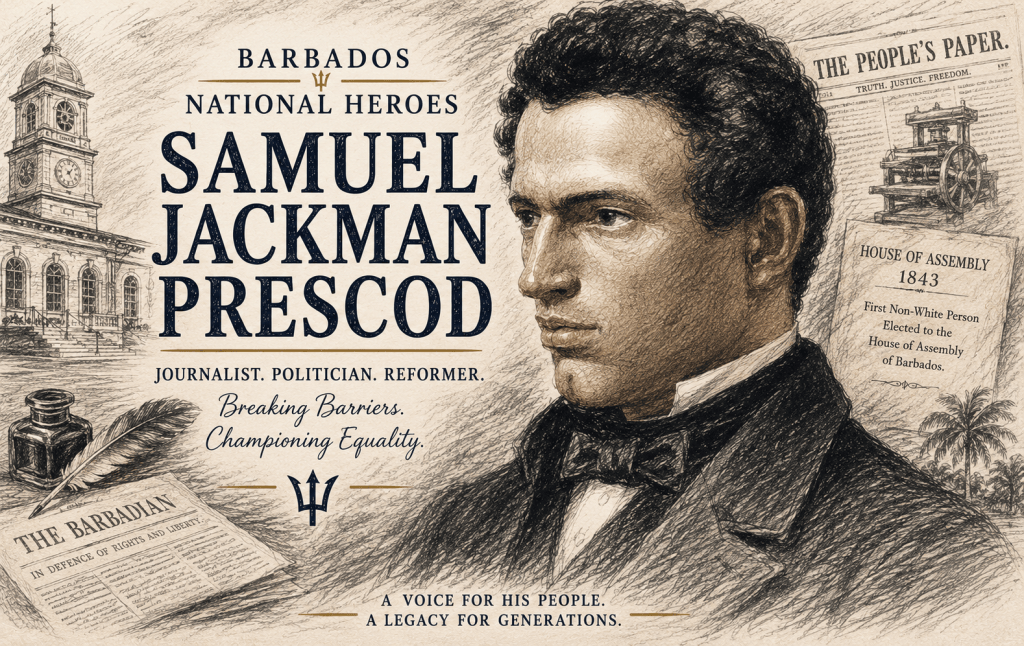
Category: Barbados National Heroes
Week: 3 of 11
Years: 1806–1871
Setting the Scene: A Colony Built to Exclude
By the early 1800s, Barbados had a small but growing population of “Free Coloured” people — individuals of mixed Black and white ancestry who were legally free but shut out of almost every meaningful form of civic life. A law dating back to 1697 required that all voters be white, Christian, and own at least ten acres of land. It wasn’t until 1721 that the testimony of a non-white person was even accepted in a Barbadian courtroom. Political power, in other words, was designed from the ground up to stay in the hands of a small class of white landowners — regardless of how educated, wealthy, or capable a Free Coloured person might be.
It’s into this system that Samuel Jackman Prescod was born, and it’s this exact system he would spend his life dismantling, piece by piece, from the inside.
Who Was Samuel Jackman Prescod?
Prescod was born around 1806, the son of Lidia Smith, a free coloured woman, and William Prescod, a wealthy white landowner. He was born outside of marriage, and — in a detail that says a great deal about the racial etiquette of the time — he was given the forenames “Samuel Jackman” after a local white planter, rather than taking any name directly tied to his own family line. He was educated at St. Mary’s, and by most accounts of the era, he was light-skinned enough to be widely described as “white-passing,” which occasionally allowed him to move through spaces legally or socially closed to darker-skinned Barbadians — a strange and uncomfortable privilege within a deeply racist system that he would go on to fight against on behalf of all Free Coloured and enslaved Barbadians, not just people who looked like him.
Despite his family’s wealth and his own education, Prescod was legally barred from politics as a young man simply because of his ancestry. That exclusion appears to have shaped the rest of his life’s work.
Journalism as a Weapon
Before he ever held political office, Prescod built influence through the press. He became closely associated with a newspaper called The New Times (later folding into what became The Liberal), which spoke to a readership of poor, working-class, and middle-class Barbadians — a very different audience from the planter-owned papers of the day. When the paper hit financial trouble, a backer named Thomas Harris stepped in to keep it afloat and gave Prescod free rein to write what he wanted. The result was a newspaper that regularly clashed with the Barbadian colonial government, using the press as a direct tool of political pressure rather than neutral reporting.
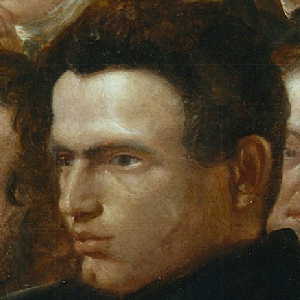
By the late 1830s, Prescod was also travelling and representing Barbados on the international abolitionist stage. In 1840, he attended the World’s Anti-Slavery Convention in London — a portrait of him from that convention still hangs today in the National Portrait Gallery in London, a rare honour for a Barbadian of his era.
Breaking Into Parliament
Change came incrementally. In 1831, free coloured Barbadians won the right to vote for the first time. Prescod, already active in abolitionist circles, began attending Parliamentary sessions to observe the process directly — reportedly he was ejected from the Assembly more than once simply for being present. As early as 1839, he was already pushing further than most of his contemporaries were willing to go, recommending universal adult suffrage — the idea that voting rights shouldn’t depend on race, wealth, or land ownership at all. The proposal was mocked by the ruling elite in Parliament at the time.
Then, on June 6, 1843, Prescod was elected as one of two members representing the City of Bridgetown — becoming the first person of African descent to sit in the Barbadian House of Assembly. He went on to help found the Liberal Party, an informal opposition bloc made up of small landowners, businessmen, and coloured clerks that pushed back against the plantation elite’s grip on power for more than two decades. He also fought hard against artificially inflated land prices, which white landholders used deliberately to keep Black Barbadians from ever accumulating enough property to qualify for the vote — a quieter, economic form of the same exclusion Prescod had faced his entire life.
Later Life and Legacy
Prescod served in Parliament for roughly 17 years before retiring, though he remained active in public life afterwards as a judge on the Assistant Court of Appeal. Throughout his career, he placed heavy emphasis on education — particularly education for the children of formerly enslaved people, a cause still honoured today through the Samuel Jackman Prescod Institute of Technology, a technical college in Barbados named in his memory.
He died on September 26, 1871, at the age of 65, and was buried in the churchyard of St. Mary’s Church. At the time, the Barbados Times newspaper eulogised him as “the great tribune of the people,” writing that he had never swerved from his commitment to justice. Even a newspaper aligned with the white planter class he’d spent his life opposing conceded, in effect, that a figure like him was unlikely to appear again — a backhanded but telling tribute to how singular his fight had been.
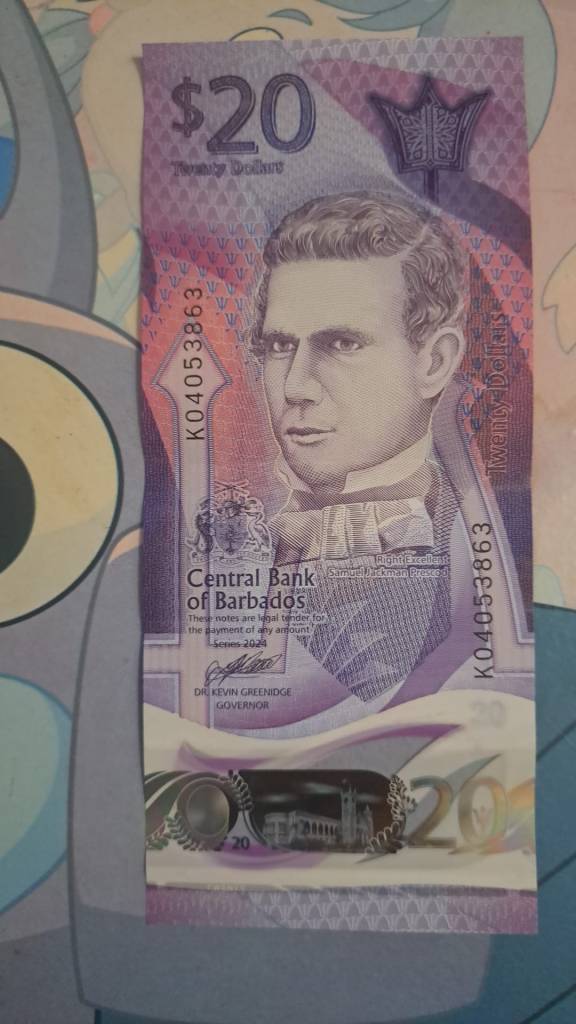
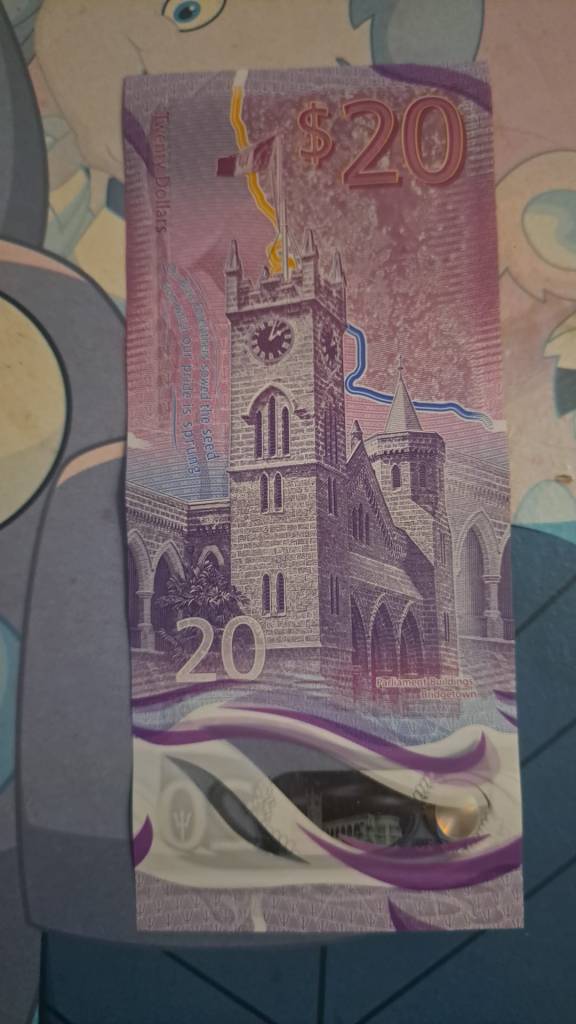
Prescod’s image has appeared on Barbadian currency, including the one-dollar note, the five-dollar note, and the long-running twenty-dollar note, which has kept his portrait through multiple redesigns. In 2006, a postage stamp featuring Prescod was issued alongside one of Sir James Lyon, the governor who had lifted voting restrictions on coloured Barbadians — pairing the two figures most associated with that turning point in Barbadian democracy.
Why Samuel Jackman Prescod Is a National Hero
When Barbados’ ten National Heroes were named in 1998, Prescod was honoured for prying open a political system that had been built, quite deliberately, to keep people like him out permanently. While Bussa fought slavery through rebellion and Sarah Ann Gill defended religious freedom through quiet defiance, Prescod’s battle was fought through the press, the courts, and eventually Parliament itself — proof that the fight for equality in Barbados took many forms across generations.
Family Reflection
A few questions to talk through together this week:
- Prescod could sometimes “pass” as white, but chose to spend his life fighting for people who didn’t have that option. What do you think that says about him?
- He used a newspaper as a tool for change before he ever held office. Why do you think journalism can be such a powerful form of resistance?
- Barbados has honoured Prescod on its money and stamps. Why do you think a country chooses to put certain historical figures on its currency?
Sources
- Samuel Jackman Prescod — Wikipedia
- Totally Barbados: Samuel Jackman Prescod — Defender of Human Rights
- Black Then: Samuel Jackman Prescod, Political Hero of Barbados (Pt. 1 & 2)
- A Bajan Tour Girl Exploring Barbados: Samuel Jackman Prescod
- Barbados.org: Barbados National Heroes
Part of the “Barbados National Heroes” series on Child of the Caribbean.



Leave a Reply