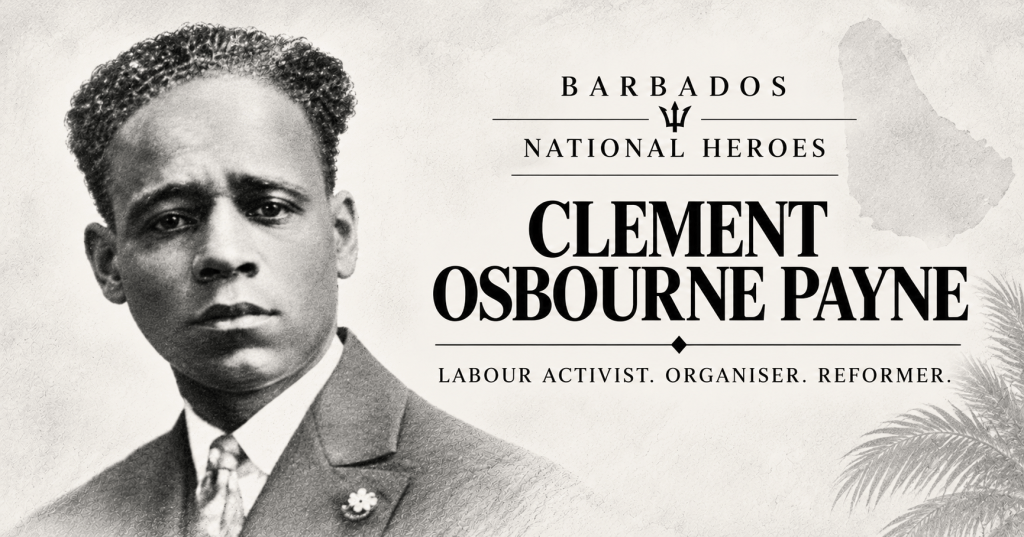
Category: Barbados National Heroes
Week: 6 of 11
Years: 1904–1941
Setting the Scene: A Region on the Edge
By the 1930s, the Caribbean was in crisis. The Great Depression had crushed sugar prices, and plantation owners across the region responded the way they usually did in hard times: by slashing wages and worsening already brutal working conditions. Between 1934 and 1939, this pressure erupted into a wave of labour unrest across the British West Indies — riots, strikes, and organising efforts that swept from island to island. New ideas were circulating too: Marcus Garvey’s Black nationalism and the growing radicalism coming out of Trinidad’s labour movement were reaching working-class Black communities throughout the Caribbean, giving people a language and a framework for demanding change.
Barbados, still governed largely by the same white “plantocracy” this series has traced since Bussa’s time, hadn’t yet had its own explosive moment. That changed in 1937, and the man at the centre of it wasn’t even, strictly speaking, Barbadian by birth.
Who Was Clement Payne?
Clement Osbourne Payne was born in Trinidad in 1904 to Barbadian parents, who moved the family back to Barbados when he was just four years old. He grew up on the island, attending Bay Street Boys’ School and later working for some years as a junior clerk — an unremarkable start for a man who would go on to shake the colony to its foundations.
In 1927, Payne returned to Trinidad, where he became deeply involved in the growth of militant trade unionism and established himself as a committed advocate for social justice. It was there that he built the organizing skills and political convictions he would later bring back to Barbados.
Return to Barbados, 1937
Payne came back to Barbados in early 1937, walking into an island already primed for unrest by the economic hardship of the Depression. He began holding public meetings in Bridgetown, speaking directly to the working poor about their rights and urging them to organise and stand up to the planter class. His message was captured in a slogan that would become closely associated with his legacy: “Educate, agitate, but do not violate.” Payne believed firmly in non-violent resistance — education and organized pressure, not riot, as the path to change.
The colonial authorities saw him differently. From his very first public meeting, Payne was placed under police observation “each moment of the day and night,” but the surveillance didn’t stop him. When labour unrest broke out in Trinidad in June 1937, Payne held a meeting in Golden Square to spread word of what was happening there — despite police attempts to shut it down. Out of that momentum, his supporters passed a resolution to form the Barbados Progressive Working Men’s Association, an early attempt at organised labour representation on the island.
Arrest, Deportation, and the Reason Behind It
The colonial government moved against Payne using a charge that had little to do with his actual activities: he was accused of falsely claiming to be Barbadian-born upon re-entering the island, when official records showed he had in fact been born in Trinidad. Payne, who had spent his childhood in Barbados and considered it home in every way that mattered, maintained he hadn’t even known the discrepancy existed. Whatever the technical truth of the charge, it was, by most historical accounts, a pretext — a legal tool for silencing an effective organiser, not a genuine immigration concern.
Payne was initially found guilty and remanded in custody. On July 22, he and roughly 300 supporters marched to the Governor’s residence demanding an audience with Governor Mark Young; Payne and thirteen others were arrested on public order charges as a result. He appealed his original conviction and won it on July 26, 1937 — but the deportation order against him stood regardless.
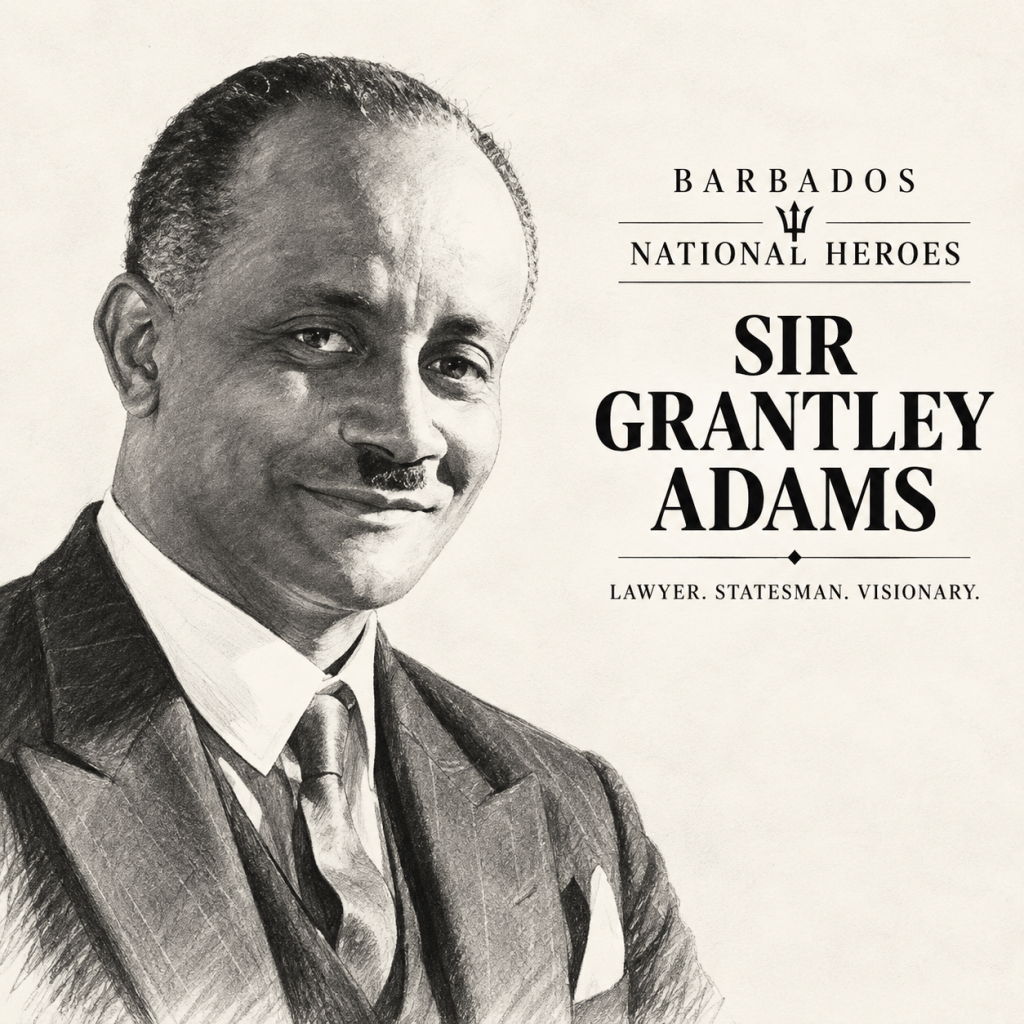
His supporters hired a young lawyer to fight the case: Grantley Adams, the same man who would become Barbados’ first Premier and a National Hero in his own right (see week 5 of this series). Adams, aware of just how much danger Payne could be in if he resisted further, advised him not to fight the deportation order itself. Payne accepted the advice. On the night of July 26, 1937, he was put on a boat and expelled from Barbados — permanently barred from ever returning to the island he considered home.
The Riots
The news of Payne’s deportation set off exactly the kind of unrest Payne himself had spent months trying to avoid. Despite his own consistent message of non-violent resistance, his supporters abandoned the “do not violate” half of his slogan almost immediately. Rioting broke out across the island and continued for four days. Bridgetown’s commercial district was severely damaged — cars were pushed into the sea or smashed, shop windows shattered, and chaos spread across the capital and beyond.
By the time order was restored, the toll was severe: fourteen people had been killed, forty-seven wounded, roughly five hundred people arrested, and millions of dollars in property damage done across the island.
The Aftermath: The Moyne Commission
The scale of the unrest forced the British government to take notice. A Commission of Inquiry — known as the Moyne Commission — was dispatched to investigate the underlying causes of the labour unrest sweeping the British Caribbean, Barbados included. Its findings were, in effect, a vindication of everything Payne had been saying for months: the Commission concluded that his charges against the island’s ruling elite were accurate, and its report called for exactly the kinds of reforms Payne had proposed — including, critically, the introduction of formal trade union legislation in Barbados.
In other words, the very government that had deported Payne as a troublemaker was, within a couple of years, forced by its own commission to admit he had been right.
Later Life and Death
Payne never set foot in Barbados again. He continued his labour work in Trinidad, into the early 1940s. On April 7, 1941, he died suddenly while speaking at a public meeting in Trinidad — he was only 37 years old.
Legacy
Payne’s four months of agitation in 1937 helped catalyse the very trade union laws and labour protections that Barbadian workers still rely on today. The Barbados Workers’ Union, which Sir Grantley Adams would later lead and which fellow National Hero Sir Hugh Worrell Springer helped found, grew directly out of the organizing momentum Payne set in motion. His memory is also carried forward today by the Clement Payne Movement, a Barbadian political party founded in 1988 and named directly in his honour.
Why Clement Payne Is a National Hero
When Barbados named its National Heroes in 1998, Payne was honoured not for holding office or winning a single legal battle, but for something arguably harder to measure: he lit the spark. He was Trinidadian by birth, deported from the island he called home, and dead before he turned 40 — and yet the four months he spent organizing Barbadian workers in 1937 fundamentally reshaped the island’s labour laws and helped set the stage for the broader political transformation that Grantley Adams would go on to lead. Payne is proof that a National Hero’s legacy isn’t always about what they personally achieved in their lifetime, but about what their actions made possible for everyone who came after.
Family Reflection
A few questions to talk through together this week:
- Payne believed strongly in “educate, agitate, but do not violate” — yet his deportation still led to violent riots he never wanted. What do you think this tells us about how movements can spiral beyond any one leader’s control?
- The very charge used to deport Payne (that he wasn’t “really” Barbadian) is something historians believe was mostly a pretext. Why do you think governments sometimes use technical rules to silence people instead of confronting their actual message?
- The British government’s own inquiry later admitted Payne had been right all along. Why do you think it often takes a crisis before those in power are willing to admit uncomfortable truths?
Sources
- Clement Payne — Wikipedia
- Totally Barbados: Clement Osbourne Payne — National Hero of Barbados
- Caribbean Beat Magazine: Missing in Action — Clement Payne
- Black Then: Clement Osbourne Payne, Trade Union Activist
- Deargood Blog: Barbados’ National Heroes — Clement Payne
Part of the “Barbados National Heroes” series on Child of the Caribbean.



Leave a Reply