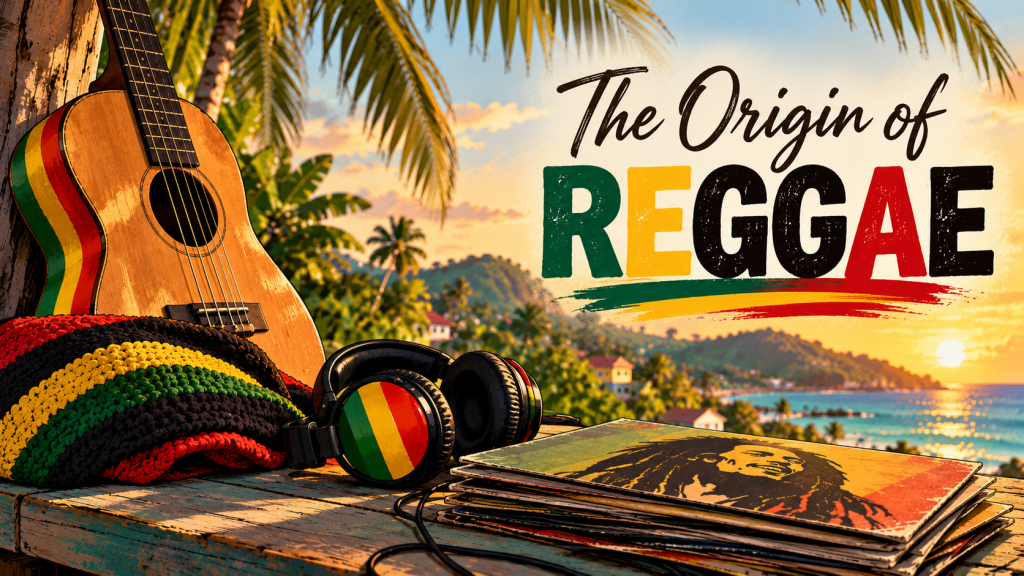
Category: Caribbean Music
Week: 1
Years: 1950s–late 1960s
Setting the Scene: An Island Finding Its Own Sound
Reggae is one of the most recognisable sounds in the world, but it didn’t appear overnight. It grew out of the music that came before it in Jamaica, passed down and reshaped from one generation of musicians to the next, much like a family tree.
Reggae is generally described as originating in Jamaica in the late 1960s, particularly in the capital, Kingston. To understand it, we have to go back a little further and meet the sounds that made it possible: mento, ska and rocksteady. We also have to meet the big speakers, called sound systems, that carried all of these sounds into the streets.
The Family Tree of Reggae
Mento: The Foundation
Mento is a Jamaican folk music built on traditions brought to the island by enslaved West Africans, which later blended with other influences such as the European quadrille dance. Mento songs were often mildly satirical and full of everyday life, and they used acoustic instruments like guitar, banjo and hand drums. Mento was often confused with calypso during the mid-twentieth century, and singers sometimes borrowed calypso songs and techniques, which is one reason the two get mixed up. Songs you may recognise from this tradition include “Day-O” and “Jamaica Farewell.”
Ska: The Sound of a New Nation
Ska began in the late 1950s, when Jamaican musicians mixed mento and calypso with American jazz and rhythm and blues they heard on the radio. The result was fast, bouncy and made for dancing, with blasting horns and guitar chords played on the off-beat. When Jamaica gained independence from Britain in 1962, ska became the music of choice for young Jamaicans wanting a sound that was truly their own. By the early to mid-1960s it was the most popular music on the island.
Rocksteady: Slowing It Down
By the mid-1960s, the music had changed again. Rocksteady was slower than ska, with more romantic lyrics, less prominent horns and a stronger focus on the bass. Nobody is completely sure why the tempo dropped. One popular story is that the singer Hopeton Lewis couldn’t sing his hit “Take It Easy” at ska speed. The name “rocksteady” became established after a single by Alton Ellis, and vocal harmony groups such as the Paragons, the Heptones and Toots and the Maytals helped define the sound.
Reggae: The Sound That Travelled the World
Reggae developed from ska and rocksteady in the late 1960s. It took the importance of the bass from rocksteady and slowed the music down even further, with a strong emphasis on the downbeat in the drum and bass and short, sharp guitar or piano chords on the off-beat. Its lyrics spoke about real life: love, hardship, faith, fairness and freedom. The song “Do the Reggay” by Toots and the Maytals, released in 1968, is often credited with giving the music its name.
The Secret Ingredient: The Sound System
Much of this music wasn’t first heard in a concert hall. It was heard in the street and in yards, on enormous speakers called sound systems. A sound system was essentially a mobile party: a crew arrived with powerful speakers, a record player and a selector to choose the songs, and the whole neighbourhood came out to dance. Sound systems were established in Kingston in the 1950s, and they became a vital part of Jamaican life, especially because the island’s radio stations did not always play the people’s music.
Competition between sound systems was fierce. Two names stand out: Duke Reid, a former policeman whose sound system was called The Trojan, and Clement “Coxsone” Dodd, whose sound system was called Downbeat. Both men became record producers so they could make exclusive tunes that their rivals couldn’t play. Reid founded the Treasure Isle label, and Dodd opened Studio One, which became one of the most famous recording studios in Jamaican history. Their rivalry helped launch the careers of many artists, including Toots and the Maytals and the Wailers. An engineer named King Tubby also worked on the sound systems of both men, and his creativity with sound helped shape the music that followed.
A Bajan Connection: Jackie Opel
Barbados has its own place in this story. Jackie Opel, born Dalton Sinclair Bishop in Bridgetown in 1937, was a Barbadian singer who spent time in Jamaica during the ska era, and he is credited by some writers as one of the architects of Jamaica’s ska beat. In 1964 he was reportedly backed by Bob Marley and Peter Tosh of the Wailers on several recordings.
When Opel returned home, he and his band, the Troubadours, developed spouge, a uniquely Bajan sound often described as Barbados’ answer to ska in Jamaica and calypso in Trinidad. Opel died in a car accident in Bridgetown on March 9, 1970, at the age of 32. His birthday, August 27, is marked as Jackie Opel Day, and an amphitheatre at the General Post Office in Bridgetown carries his name. We’ll come back to spouge properly later in the series.
How Reggae Reached Britain
Sound systems travelled with the Windrush generation, who came from Jamaica and across the Caribbean to Britain in the 1950s and 1960s. In British cities, sound systems became spaces where Caribbean communities could come together and celebrate their music and heritage. Early UK sound system operators such as Duke Vin became hugely popular, and sound systems are still one of the key arts of Notting Hill Carnival today. Over the decades, the culture they created influenced British music far beyond reggae itself.
Listen Together
Play these in order to hear the music change over time:
- Ska: “Guns of Navarone” by The Skatalites
- Rocksteady: “Ba Ba Boom” by The Jamaicans
- Early reggae: “Do the Reggay” by Toots and the Maytals
- Reggae: “Israelites” by Desmond Dekker and the Aces
- Bonus, spouge: “You Send Me” by Jackie Opel
Why It Matters
Reggae came from mento, ska and rocksteady, was carried into the streets by sound systems, and was shaped by ordinary people telling their own stories in their own words. It then travelled to Britain and across the world, taking Caribbean culture with it. For Caribbean children growing up far from the islands, understanding where reggae comes from is a way of understanding where they come from, too.
Family Reflection
A few questions to talk through together this week:
- Reggae grew out of earlier kinds of music. What other things in life grow out of what came before them?
- Sound systems let whole neighbourhoods share music for free in the street. Why do you think shared music brings people together?
- Jackie Opel left Barbados, learned from another island’s music, and came home to create something new. What do you think we can learn from the way Caribbean islands share and borrow ideas?
Sources
- Reggae — Wikipedia
- Reggae genres — Wikipedia
- Cayman Compass: Exploring the Origins of Reggae
- House of Marley: A Brief History of Reggae
- Sound system (Jamaican) — Wikipedia
- Duke Reid — Wikipedia
- Boomtown: It All Started with a Soundsystem
- Google Arts & Culture: The Roots of Sound Systems and Notting Hill Carnival
- Spouge — Wikipedia
- Jackie Opel — Wikipedia
- Barbados Today: Jackie Opel, Forgotten Hero of Jamaica and Barbados
- Barbados Pocket Guide: Spouge
Next week, we go back to the roots of it all with mento, Jamaica’s folk music and the grandparent of reggae. Until then, keep the music playing.
Part of the “Caribbean Music” series on Child of the Caribbean.




Leave a Reply